Facebook
 X
X
 Pinterest
 Copy Link
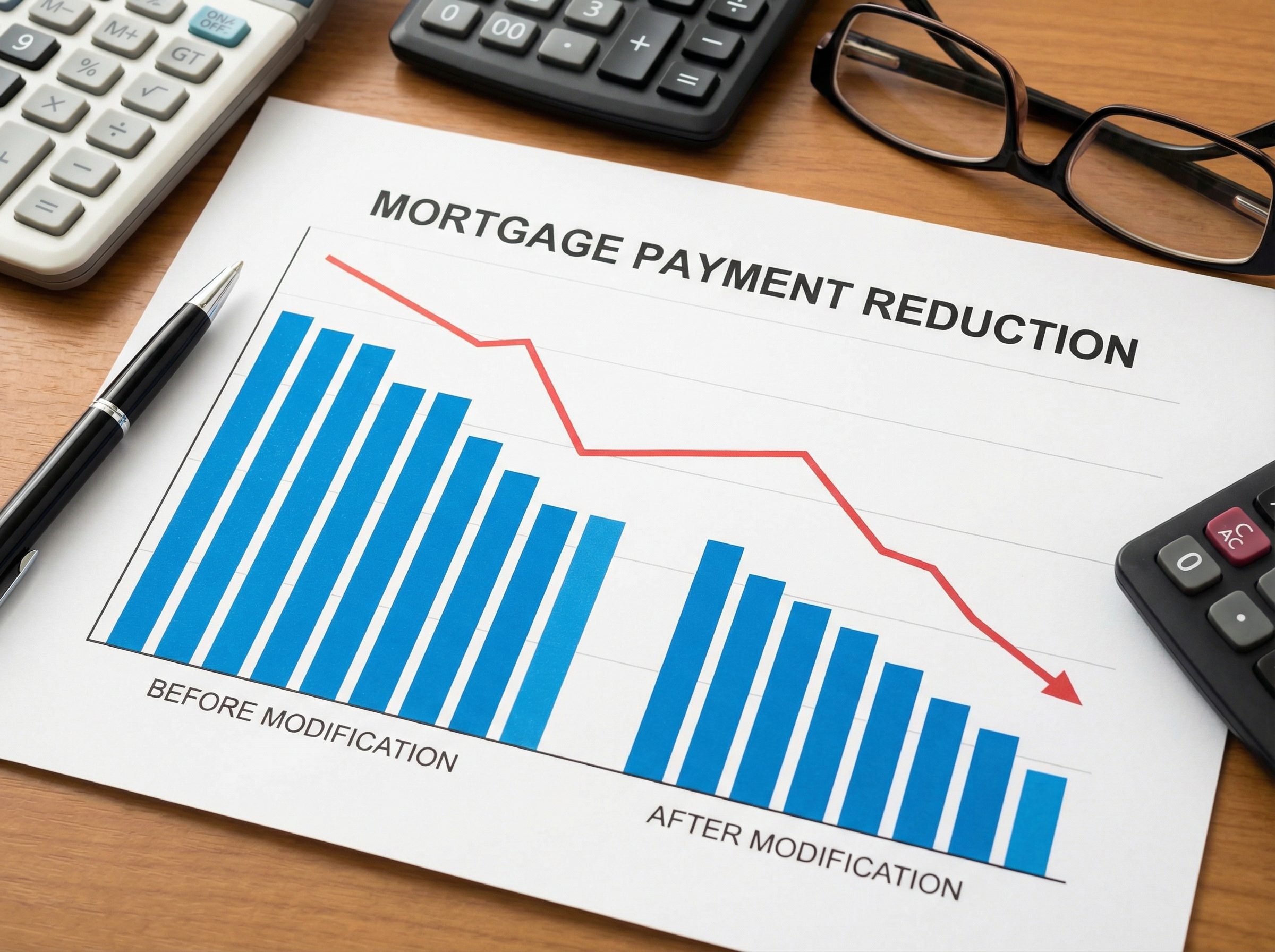
Mortgage payment chart decreasing after modification
Sometimes life changes quickly. For example, a job loss, medical bills, or unexpected expenses can make it hard to keep up with mortgage payments.
However, there may be options that help homeowners stay in their homes. One possible option is a loan modification.
In this guide, you will learn what a loan modification is, how it works, and when it may help.
What Is a Loan Modification?
A loan modification is a change made to the original mortgage loan terms. The goal is to make the monthly payment more affordable for the homeowner.
In other words, the lender adjusts the loan so the borrower can continue making payments.
Instead of replacing the loan with a new one, the lender simply changes certain parts of the existing loan agreement.
How Loan Modifications Can Help
A loan modification may lower the monthly payment in several ways.
For example, the lender may:
1. Lower the Interest Rate
First, the lender may reduce the interest rate. As a result, the monthly payment may decrease.
2. Extend the Loan Term
Next, the lender may extend the loan term. For instance, a 20-year loan could be extended to 30 or even 40 years.
This spreads the balance over more time, which can lower the monthly payment.
3. Add Missed Payments to the Loan Balance
Sometimes, missed payments may be added to the loan balance instead of being paid immediately.
Therefore, the homeowner can get back on track without paying a large lump sum.
4. Change the Loan Structure
In certain situations, the lender may adjust other parts of the loan to make payments easier to manage.
However, every situation is different, and lenders review each request carefully.
Who May Qualify for a Loan Modification?
Generally, lenders look for homeowners who:
-
Are experiencing a financial hardship
-
Want to keep their home
-
Have enough income to support a modified payment
-
Are willing to provide financial documents
Because every lender has different guidelines, requirements can vary.
Loan Modification vs. Refinancing
Many people confuse loan modification with refinancing. However, they are different.
Loan Modification
-
Adjusts the current mortgage
-
Usually requested when facing hardship
-
Works with the existing lender
Refinancing
-
Replaces the loan with a new mortgage
-
Often used to get better interest rates
-
Requires loan qualification
Important Things to Know
Before requesting a loan modification, homeowners should understand a few key points.
First, approval is not guaranteed. Lenders will review income, hardship details, and payment ability.
Second, the process may take time. Therefore, homeowners should stay in communication with their lender.
Finally, it is often helpful to speak with a real estate professional or housing advisor to understand available options.